AMY® Automatic Rescue
Breathing™ Platform
Automated. Guideline-based. No settings. No training required.
The first patented platform that automates rescue breathing during CPR — delivering 100% oxygen, correct breath volume, and proper timing automatically for any patient size. The AED of rescue breathing, ready for a strategic licensing partner.
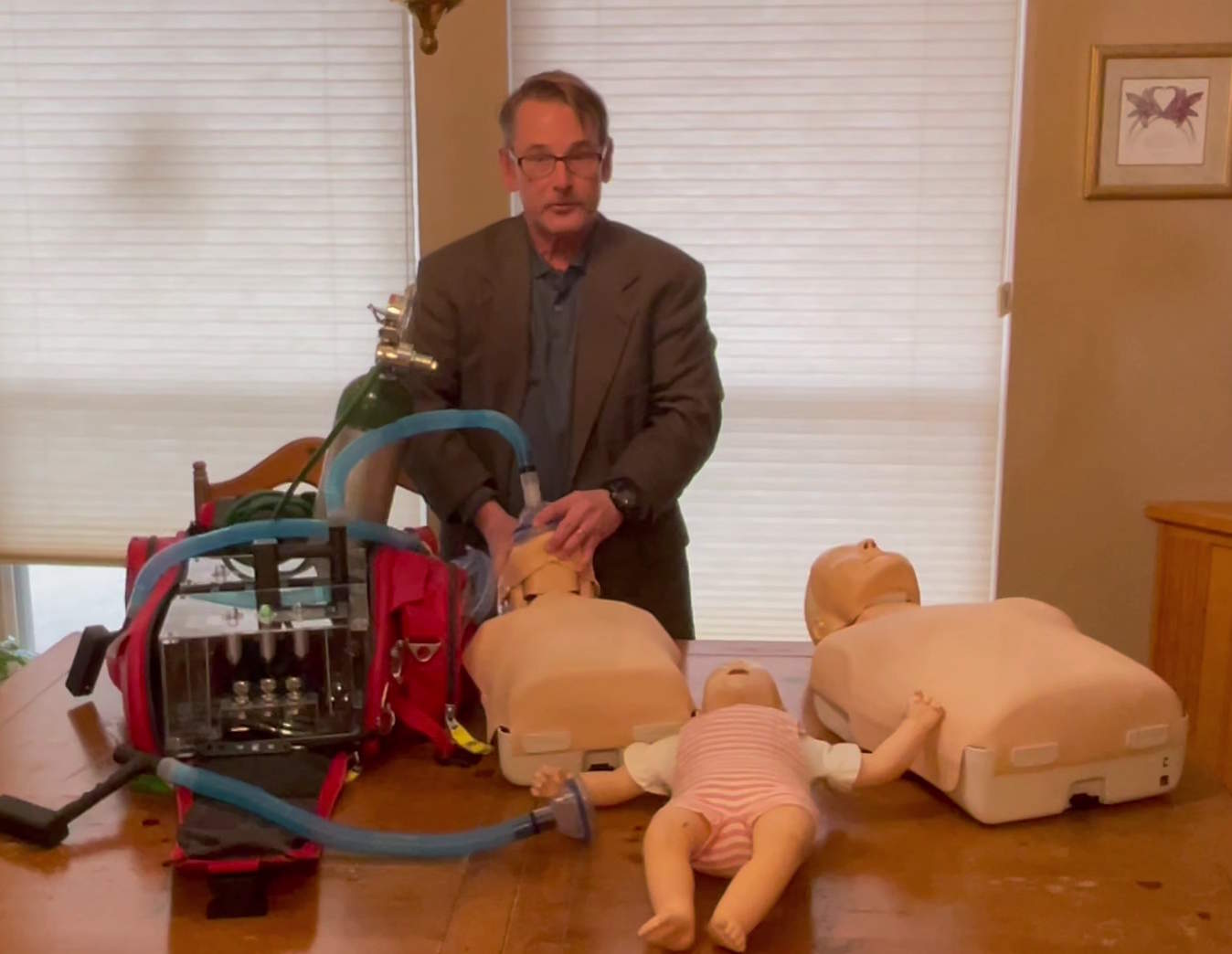
Six Steps. Fully Automated.
Zero Judgment Calls.
AMY eliminates the most error-prone aspects of rescue breathing through hardware-enforced, mask-keyed automation — no user input, no calibration, no training-dependent execution.
Select the Right Mask
Responder selects the correct mask size — infant, child, or adult — from the color-coded mask set. No other decision required.
Attach Mask to Device
The mask couples to the handpiece via a keying connector. The mechanical fit physically actuates the correct internal switch — automatically.
Parameters Set Automatically
The controller reads the switch state and instantly sets breath volume, rate, flow, and pressure limit. No user action required.
Position Mask on Patient
Responder seats the mask on the patient's face and manages airway. The device handles all breath parameters — the only skill required is airway positioning.
Synchronized Breath Delivery
Breaths are coordinated with chest compressions. For unprotected airways, delivery pauses during compressions to prevent gastric insufflation.
Optional: Auto-Alert EMS
On activation, a communications module can auto-contact 911, enable two-way communication, and deliver audible/visual guidance to the responder.
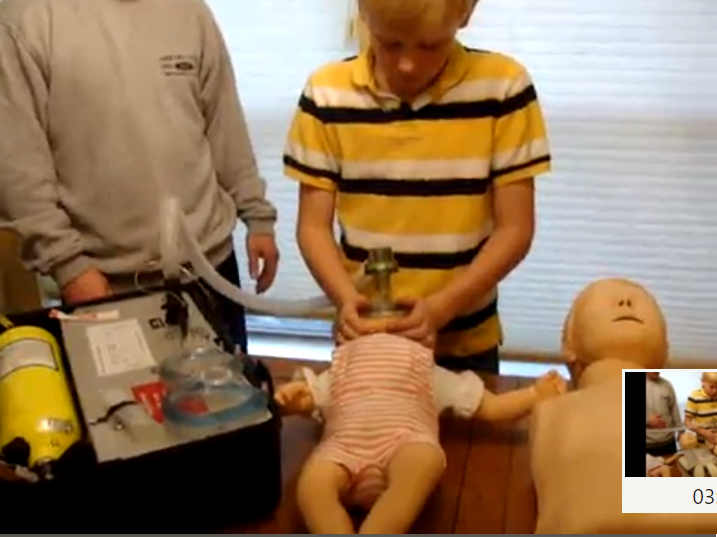
Human-factors simplicity validated — a 12-year-old operated the device correctly on first use, without any training.
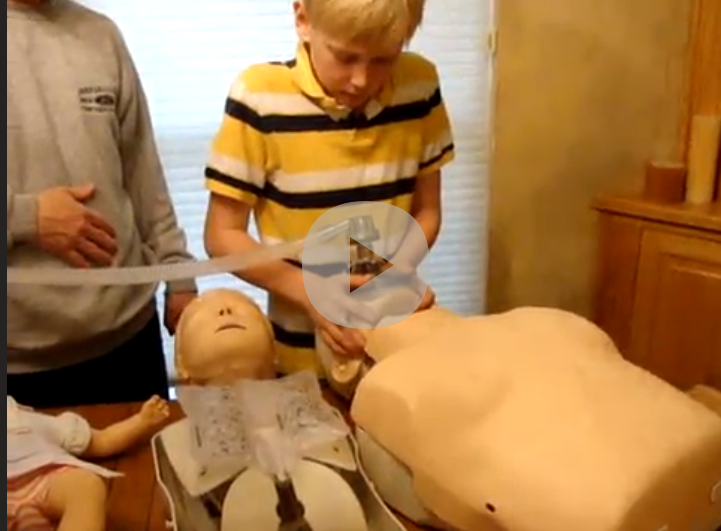
"If a 12-year-old can use it correctly, anyone can." — Core design principle, AMY Platform
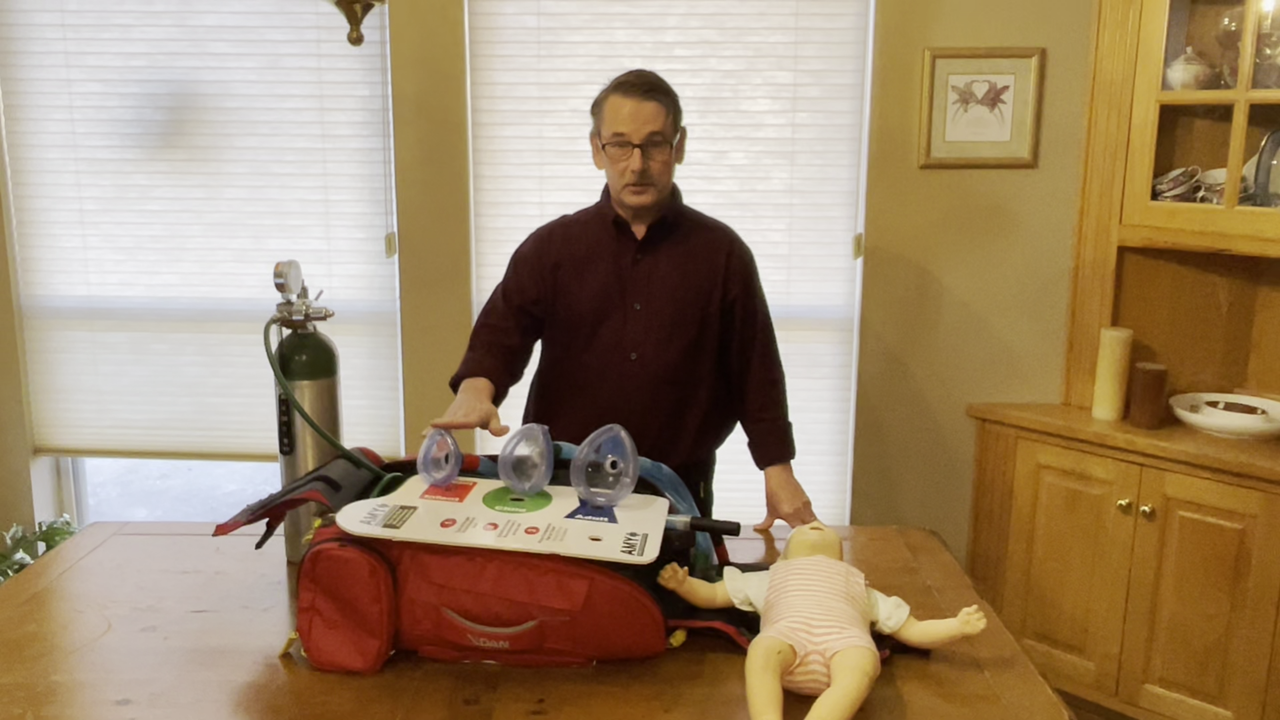
Three mask sizes — each with a unique mechanical keying profile that sets all breath parameters on attachment.
Correct Breaths.
Every Patient. Every Time.
Parameters are hardware-preset — no display, no user adjustment, no risk of operator error.
- Adult: 500–600 mL tidal volume · 1-sec inspiratory time · 10 breaths/min
- Child: Broselow-based volume · 1-sec inspiratory time · 20 breaths/min
- Infant: Broselow-based volume · 1-sec inspiration / 1-sec expiration · 30 breaths/min
- Pressure-limited delivery ensures safe maximum insufflation regardless of technique
- Software-updatable profiles — guideline changes are a routine software update, no hardware redesign needed
- AHA & Broselow compliant — clinically grounded by an ER physician with deep airway expertise
Where AMY Fits
Initial focus is on equipped and qualified responders where rescue breathing is expected but execution risk remains high. Expansion follows the proven AED adoption path.
- EMS / Fire / Ambulance Services: First-response environments where rescue breathing is protocol — stress and time pressure degrade even trained execution
- Professional Lifeguards & Aquatic Safety: Drowning victims require immediate, correct rescue breathing — AMY removes the skill-dependency barrier at the point of rescue
- Emergency Response Teams: Industrial, military, and institutional teams with trained personnel but inconsistent skill maintenance between incidents
- Hospital & Clinical Settings: Companion to advanced airways — frees the advanced practitioner's hands and reduces cognitive load during resuscitation
- Senior Care Facilities: Staff who rarely perform CPR benefit most from automation that eliminates training-decay risk at the moment it matters most
- Public Safety & AED Programs: Future expansion into trained-layperson environments, following the trajectory of AED adoption over two decades
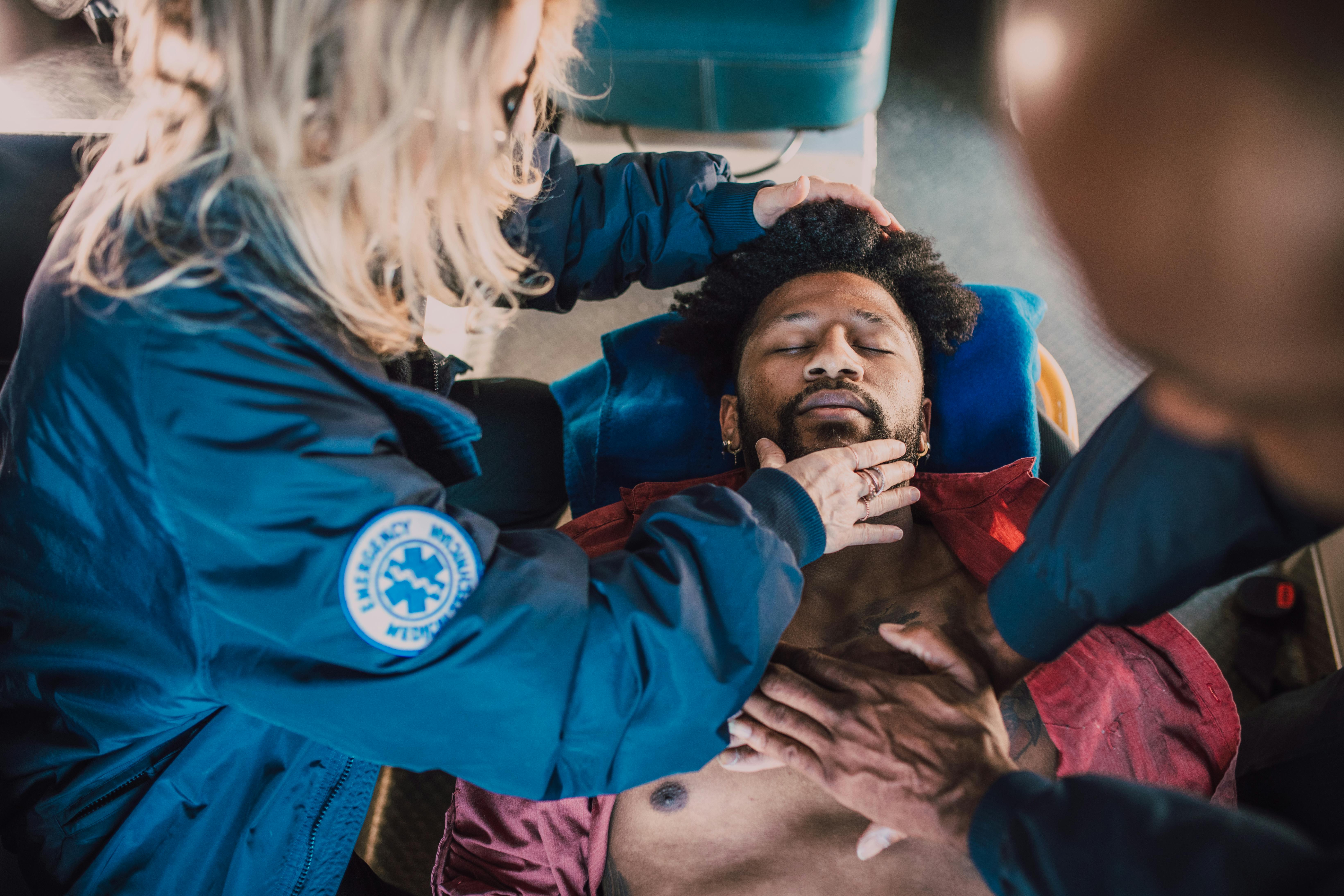
Even trained EMS professionals struggle with correct rescue breathing under stress. AMY eliminates execution risk at the point of care.

Rescue breathing failures happen in every setting — equipped or not. AMY addresses the execution gap wherever CPR is performed.
No Existing Product Does What AMY Does
No current device automates the complete rescue breathing cycle with auto patient-sizing, 100% oxygen delivery, and AHA guideline compliance in a portable, low-training form factor.
Fully Automated — Zero Settings
Mask attachment automatically configures all breath parameters. No display, no user input, no calibration. The only device in its class with hardware-enforced parameter control.
100% Oxygen Delivery
Connects to a supplemental O₂ source for high-concentration delivery. Mouth-to-mouth delivers only 16–17% O₂ — far below what cardiac arrest victims require.
Auto Patient-Size Detection
Color-coded masks with unique mechanical keying profiles detect patient category at the moment of attachment — before the first breath is delivered, with no user input.
Eliminates Training Decay Risk
The device enforces correct parameters regardless of skill level or time since training. The right breath is always the delivered breath — even years after certification.
AED-Compatible Architecture
Intentionally designed to leverage existing AED electronics, battery systems, UI paradigms, and regulatory frameworks. AMY is a platform extension, not a new device build.
Compression-Synchronized Delivery
Sensor-based compression detection pauses breath delivery for unprotected airways — preventing gastric insufflation, a well-documented complication of manual ventilation.
| Capability | AMY™ Platform | BVM (Manual) | Pocket Mask | Portable Ventilators |
|---|---|---|---|---|
| Fully automated rescue breathing | ✔ | ✗ | ✗ | ✗ |
| 100% oxygen delivery | ✔ | ✔ | ✗ | ✔ |
| Auto patient-size detection | ✔ | ✗ | ✗ | ✗ |
| No manual settings required | ✔ | ✗ | ✗ | ✗ |
| AHA guideline compliant | ✔ | Requires skill | Requires skill | Partial |
| No mouth-to-mouth contact | ✔ | ✔ | ✗ | ✔ |
| Minimal training required | ✔ | ✗ | ✗ | ✗ |
| AED platform compatible | ✔ | ✗ | ✗ | ✗ |
What the Field Is Saying
Feedback from EMS professionals, physicians, lifeguards, and aquatic safety experts consistently validates both the need and the approach.
Now it's time to take rescue breathing to the next level and make it easier. I REALLY like the idea of the AMY as the rescue breathing analog to the AED — like an AED for breathing.
This is just what we need. This item could become the standard of care in the industry quickly.
The potential value of AMY's contribution to saving lives is of high interest to Air Liquide. I do believe there is value in what you are doing and the technology you have developed.
I am a clinician and can see the potential value of your device.
What you have developed would be beneficial in many settings.
We are very interested in purchasing a unit when they become available. Best of luck to you on this important endeavor!
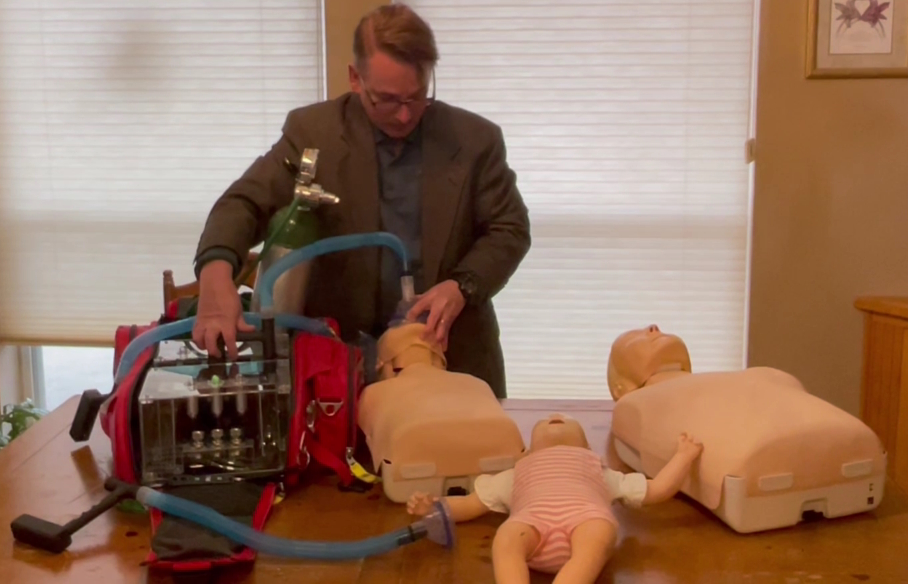
Proper mask fit validated across patient sizes — auto-sizing removes guesswork at the moment it matters most.
A De-Risked Platform Ready for a Strategic Partner
AMY is offered as a phased licensing structure designed to minimize upfront risk for the partner. Key technical, clinical, and regulatory groundwork is complete — partner work focuses on confirmation and integration, not invention.
Evaluation & Validation License
- Non-exclusive right to evaluate AMY IP and platform
- Access to prototypes, documentation, technical materials
- Engineering confirmation and AED integration assessment
- Human factors and usability validation
- Design for manufacturability review
- Regulatory pathway alignment — Class II / 510(k)
- Clear go / no-go decision for Phase 2
Commercial License
- Exclusive or segment-exclusive commercial rights
- Right to manufacture, market, and sell AMY-platform products
- Right to integrate AMY into existing AED or resuscitation lines
- Partner-led manufacturing, regulatory approval, and distribution
- Royalty-based economics on net sales
- Optional co-branding — "Powered by AMY®"
- Performance milestones and exclusivity thresholds
The Hard Work Is Done. Partners Confirm and Integrate.
- Clinically grounded design by an ER physician with deep airway expertise
- Large functional prototype demonstrated and validated
- Human-factors simplicity proven — non-trained adolescent operated correctly on first use
- Core automation logic established for rate, volume, and flow
- Clear regulatory pathway identified — Class II / 510(k)
- 5 issued / published U.S. patents with continuation strategy
- Strong field validation from EMS, lifeguards, physicians, and trainers
- Software-adjustable profiles — guideline updates need no hardware redesign
5 U.S. Patents. Stacked Protection.
The portfolio spans automation method, system architecture, device apparatus, and single-use configuration — structured so a competitor cannot design around one patent without encountering another.
| Patent / App. | Title | Status | Technology Protected | Est. Expiry |
|---|---|---|---|---|
| US 8,707,954 B2 | Air/Oxygen Supply System and Method | Issued 2014 | Core automation method · pressure-limited O₂ delivery · mask-keyed parameter setting | ~2028 |
| US 8,844,521 B2 | Air/Oxygen Supply System | Issued 2014 | Portable ventilator architecture · auto 911/EMS notification | ~2030 |
| US 10,478,586 B2 | Automated Rescue Breathing Unit | Issued 2019 | AED/platform integration · apparatus claims · second-generation protection | ~2036 |
| US 10,556,074 B2 | Automated Rescue Breathing Unit | Issued 2020 | Platform architecture · AED integration · licensing leverage for AED manufacturers | ~2037 |
| US 2023/0263984 A1 | ARBU with Keying System (Capstone) | Published · Pending | Color-coded keying · compression-synchronized delivery · single-use configuration · protected vs. unprotected airway | ~2042 |
Strategic Fit
AMY is purpose-built to integrate into existing resuscitation product lines. It is a platform capability that adds automated rescue breathing to what partners already make and sell — not a standalone consumer product.
AMY is particularly well-suited for organizations operating in:
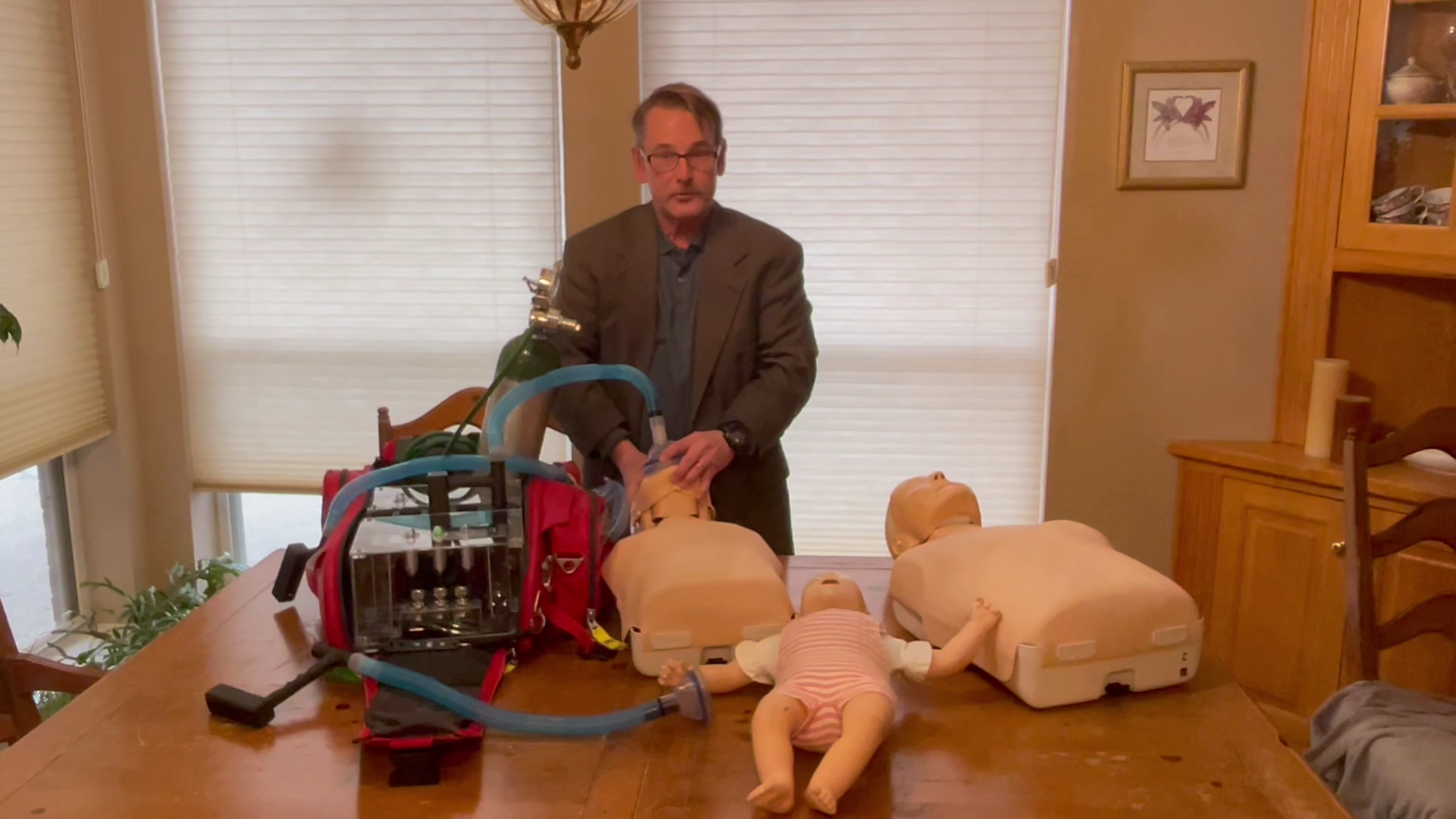
The platform's simplicity translates directly to lower training burden — and lower liability — for institutional partners at every level.
Ready to Explore a Licensing Partnership?
AMY is represented exclusively by Licensing Consulting Group. Reach out to begin a confidential conversation about strategic fit, deal structure, and next steps.
AMY Resuscitation, LLC · Tyler, TX
Clinically grounded design developed from direct observation of rescue breathing execution failures across professional and lay responders in real-world resuscitation settings.